Software Engineering Methodologies
UML Use Cases
Michael L. Collard, Ph.D.
Department of Computer Science, The University of Akron
Requirements
- Describes what the system is supposed to do
- Often is given in English (i.e., not in a formal language)
- If a system does not meet the actual requirements, then it has failed
- Requirements Engineering, Requirements Elicitation
Use Case Diagrams
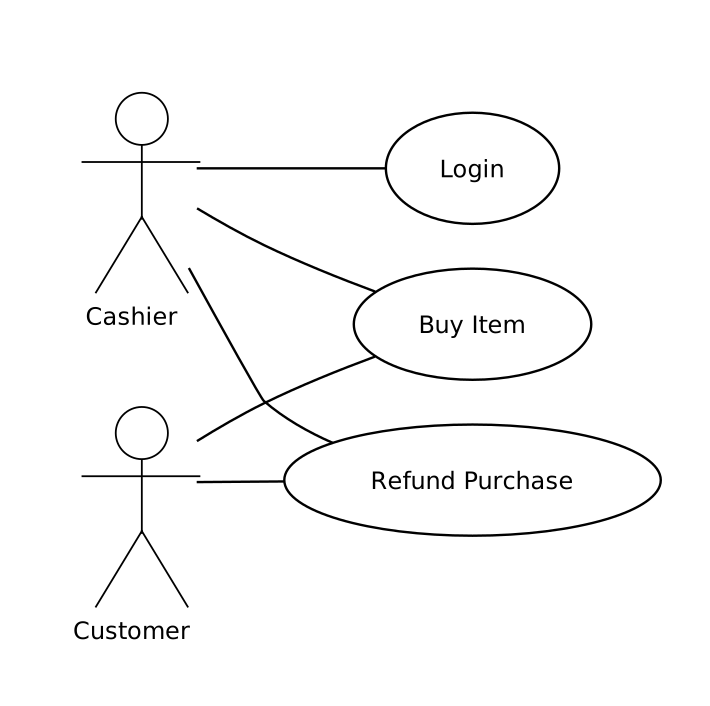
- Description of a system's behavior as it responds to a request that originates from outside of that system
- Describes a set of sequences
- Each sequence represents the interactions of things outside the system (actors) with the system itself (and fundamental abstractions)
- Use cases represent the functional requirements of the system (must state non-functional requirements elsewhere)
Use Case
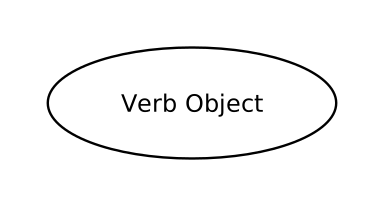
- Each use case has a descriptive name
- Describes what a system does but not how it does it.
- Use case names must be unique within a given package
- Examples: withdraw money, process loan
Actor
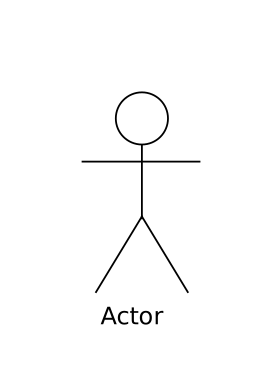
- Actors have a name
- An actor is a set of roles that users of use cases play when interacting with the system
- They are external entities, e.g., people, other systems
- Examples: Customer, Loan officer
What is a Use Case?
- Use case captures some user-visible functionality
- The granularity of functionality depends on the level of detail in your model
- Each use case achieves a discrete goal for the user
- Use Cases are generated through requirements elicitation
Goal vs. Interaction
- Goal - something the user wants to achieve
- Format a document
- Ensure consistent formatting of two documents
- Interaction - things the user does to achieve the goal
- Define a style
- Change a style
- Copy a style from one doc to the next
Point of Sale Terminal
Extend and Include
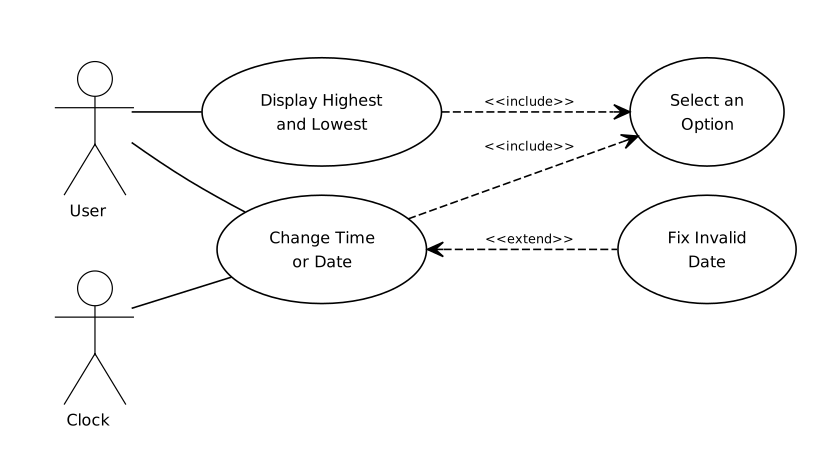
Generalization
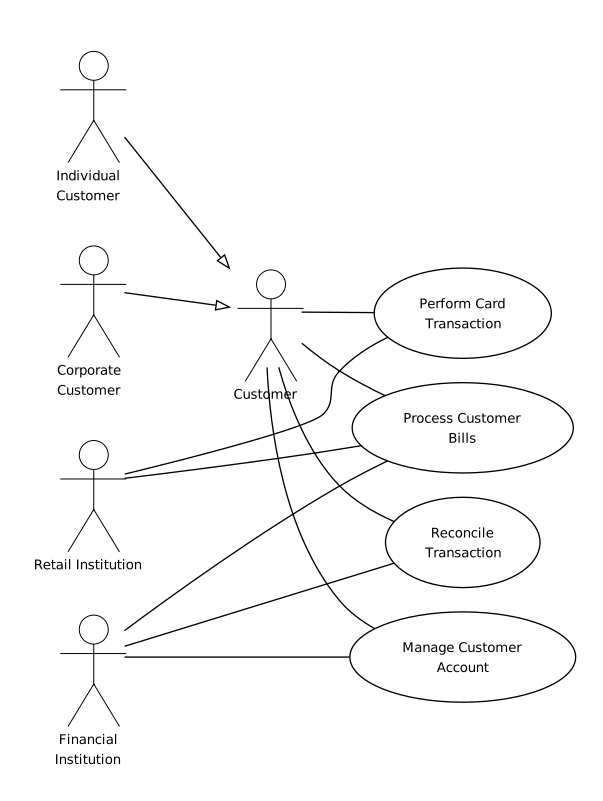
Use Case Diagram
Developing Use Cases
- Understand what the system must do - capture the goals
- Understand how the user must interact to achieve the goals - capture user interactions
- Identify sequences of user interactions
- Start with goals and refine them into interactions
Use Case Contents
- [Cockburn'01]
- fully-dressed
- casual
Casual Use Case
- Title (goal)
- Primary Actor
- Scope
- Level
- (Story): paragraph or two of text in the body of the use case
Fully-Dressed Use Case
- Title
- Primary Actor
- Goal in Context
- Scope
- Level
- Stakeholders and Interests
- Precondition
- Minimal Guarantees
- Success Guarantees
- Trigger
- Main Success Scenario
- Extensions
- Technology & Data Variations List
- Related Information
User Story
- Title: Search and Replace a Word
- Description: A user realizes they incorrectly capitalized a word everywhere on web pages. They tell the web page editor to search for all occurrences and replace them with the corrected word.
- Priority:
- Estimate:
Use Case Example
| Feature | User Stories | Use Cases |
|---|---|---|
| Definition | Short, informal descriptions of one or more aspects of a software feature from an end-user perspective | Formalized, detailed descriptions of system interactions, often including actors, scenarios, preconditions, and postconditions |
| Format | As a [role], I want to [action/desire] so that [benefit/reason]. | Typically structured with title, main success scenario, extensions, preconditions, and postconditions |
| Length | Typically one to three sentences | Can be several pages long |
| Detail | High-level and often focuses on value or benefit. | Detailed, specifying step-by-step interactions |
| Purpose | Convey the value of a feature or requirement to the development team. | Describe how a system will behave under various conditions |
| Usage | Agile development methodologies, especially Scrum | Traditional software development, requirements gathering, and detailed system design |
| Stakeholders | Mainly product owners, developers, and end-users | Business analysts, system architects, testers, and sometimes end-users |
| Flexibility | Adaptable to changing requirements | More rigid, requires updates when changes occur |
| Associated Artifacts | Acceptance criteria, tasks | Diagrams, mock-ups, test cases |
User Stories vs. Use Cases
| User Stories | Use Cases |
|---|---|
| needs of the software | behavior in the software to meet those needs |
| Easy for users to read | Describe the complete interaction |
| A single-user story … | may map to several use cases |